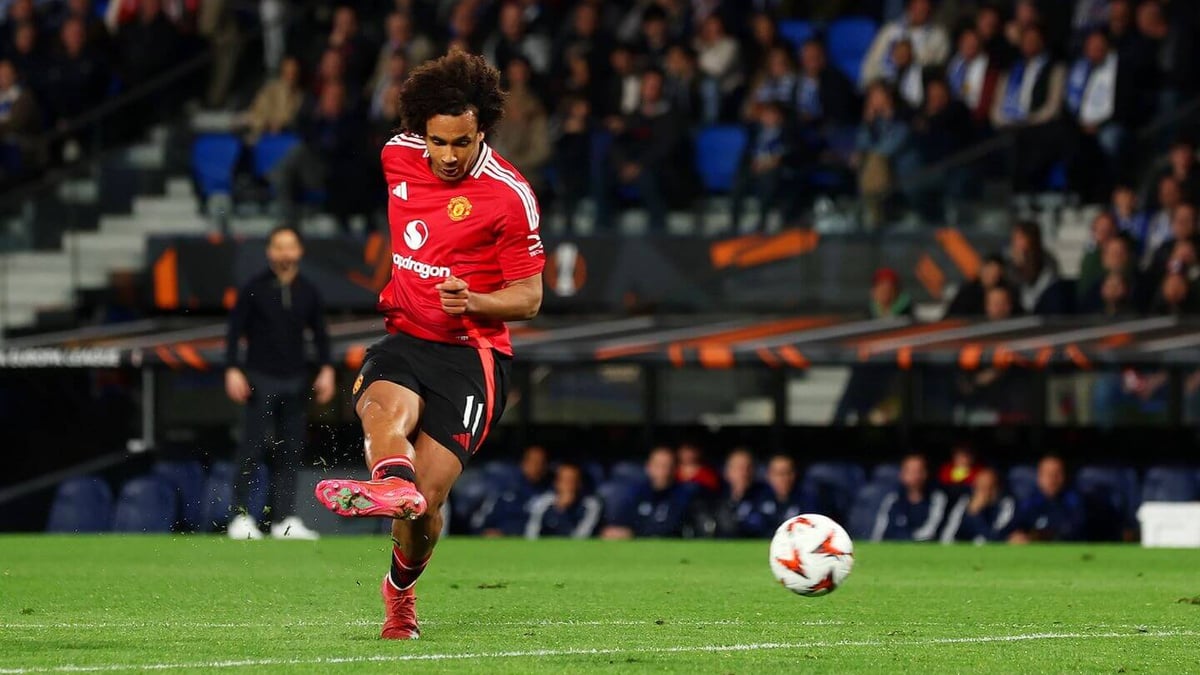
Joshua Zirkzee arrived at Selhurst Park under a cloud, but by full-time, he had rewritten the script. The much-maligned forward who had struggled for rhythm earlier in the week produced the kind of second-half performance that can change narratives.
After a quiet first 45 minutes, Zirkzee struck a smart equaliser from a tight angle and then rose to win the aerial duel that led to the free-kick from which Mason Mount curled home the winner.
Manager Rúben Amorim was quick to praise more than the goals, highlighting Zirkzee’s improved movement and physicality in the second half.
The numbers back him up: Zirkzee doubled his aerial duels won in the final half-hour, lifted his pass accuracy from 57% to 77%, and finished the match with six successful layoffs — the most of any player that Premier League weekend. Those link-up passes are a hallmark of his game, one that saw him rank highly for such contributions during his time in Serie A with Bologna.
Eighteen months into his United career, Zirkzee is showing the combative edge his coaches always insisted he needed. The transformation was subtle but decisive: more duels won, smarter runs behind defenders and a willingness to be the team’s fulcrum when the game demanded it.
Elliot Anderson posts Luka Modric-style numbers
Nottingham Forest’s defeat to Brighton masked an extraordinary individual display from Elliot Anderson.
The midfielder created six chances, completed six dribbles and made 13 ball recoveries, while touching the ball 107 times — a rare blend of creativity, ball-carrying and defensive work-rate that few central midfielders produce in a single match.
To find a comparable statistical footprint you have to reach back to Luka Modric in 2011. Anderson’s combination of chance creation and relentless recovery is the kind of all-round midfield performance that marks a player capable of influencing every phase of the game.
Even in defeat, Anderson’s numbers underline why he is now one of the most sought-after young English talents: he can win the ball, drive it forward and unlock defences with the same breath.
Kamara’s long-range brilliance underlines Villa’s shooting threat
Aston Villa’s victory over Wolves was sealed by a moment of pure technique from defensive midfielder Boubacar Kamara. The left-footed strike from outside the box was not only a stunning finish but also the ninth goal Villa have scored from distance this season — more than any other side and, remarkably, more than Villa have netted from inside the area.
Manager Unai Emery shrugged off suggestions the goal was fluke, pointing to hours of practice and a tactical need to punish teams that sit deep.
The numbers suggest Villa’s long-range potency is a genuine weapon, even if expected-goals models warn it may not be sustainable forever. For now, Kamara’s finish was decisive and emblematic: a holding midfielder who can do the dirty work and, when required, produce a moment of world-class quality.
These three snapshots — Zirkzee’s physical awakening, Anderson’s Modric-esque stat line and Kamara’s long-range audacity — capture the Premier League’s delicious unpredictability: players reinventing themselves, youngsters staking claims, and specialists delivering the moments that tilt matches.